Real Estate Growth That Builds Stronger Cities: Investor Confidence, Tax Revenue And Affordable Housing
Real Estate, Public Finance And Housing Analysis By Zeeglobalvision | Investor Confidence, Market Activity, Tax Revenue And Social Development
Real estate growth becomes economically meaningful when it creates more than higher property prices.
A healthy property market should attract long-term investment, support construction and transactions, broaden the local revenue base, improve infrastructure and create housing that ordinary households can actually use.
That connection matters because real estate sits at the intersection of private wealth and public systems.
When investors trust property rights, planning rules, financing conditions and demand, capital becomes more willing to enter the market. Development creates jobs and transactions. Occupied properties expand the tax base. Stronger local finances can support roads, water, sanitation, schools, safety and public spaces.
Those services can then improve the quality and attractiveness of neighborhoods, creating another round of demand and investment.
But the same cycle can fail.
If supply remains restricted while investor demand rises, prices and rents can become less affordable. If cities depend too heavily on transaction taxes, they may discourage mobility. If property revenue grows but public services remain weak, investor confidence can eventually weaken rather than strengthen.
Zeeglobalvision Urban Growth Principle: Real estate growth is strongest when private market activity, public revenue, infrastructure and affordable housing reinforce one another instead of competing against one another.
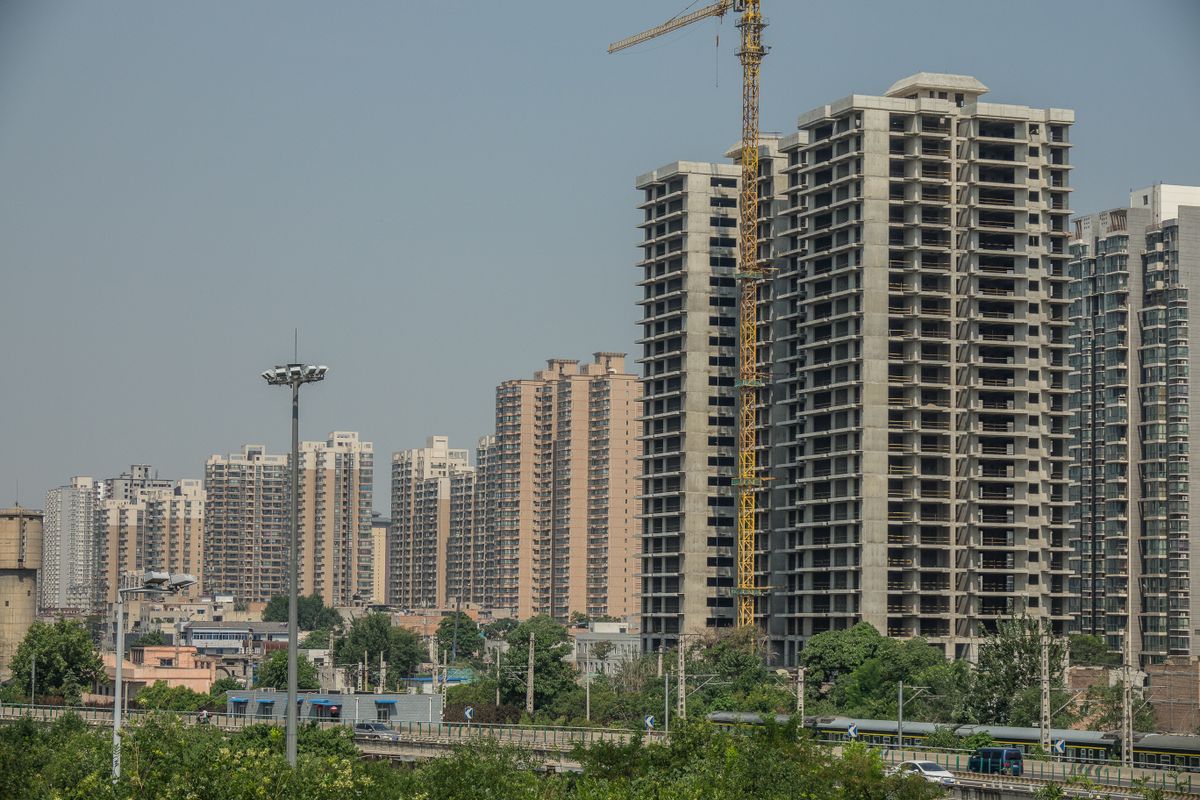
Real Estate Growth Is More Than Rising Prices
Property prices are only one part of the market.
A strong real estate system also depends on:
- Sales and leasing activity
- New construction
- Vacancy and occupancy
- Mortgage availability
- Development finance
- Rental income
- Household affordability
- Infrastructure capacity
- Investor participation
A market where prices rise rapidly while sales collapse, rents become unaffordable and new supply remains blocked may look strong on paper while becoming structurally weaker.
The OECD reports that real house prices have increased by more than 40% on average across OECD countries over the past decade. Housing-related spending also accounts for more than one-fifth of household expenditure on average.
That is why policymakers and investors need to distinguish asset inflation from productive market growth.
Investor Confidence Is The First Link In The Chain
Real estate development requires long time horizons.
Capital may be committed years before a project reaches full occupancy.
Investors therefore care about more than today's selling price.
Confidence depends on:
- Reliable ownership records
- Predictable planning rules
- Transparent approvals
- Access to finance
- Stable taxation
- Infrastructure availability
- Enforceable contracts
- Real demand from households and businesses
Investor confidence does not mean believing prices can never fall.
It means believing the market is functional enough to buy, build, lease, refinance and eventually sell without unpredictable institutional barriers.
Market Activity Converts Confidence Into Economic Activity
When confidence is strong enough to produce action, the benefits spread beyond developers.
Real estate activity supports:
- Construction workers
- Engineers and architects
- Surveyors
- Banks and mortgage providers
- Property managers
- Legal and accounting services
- Building-material suppliers
- Transport and logistics
- Retail and local services
The strongest markets create completed, occupied and maintained assets.
Speculative trading in land or empty units may increase transaction values without creating the same level of employment, service demand or community value.

3D cutaway: Investor confidence can create market activity, broaden the revenue base, support public services and strengthen housing and social outcomes. Zeeglobalvision.
How Real Estate Growth Expands The Tax Base
Real estate can generate public revenue through several channels.
Depending on the jurisdiction, these may include:
- Recurrent property taxes
- Land taxes
- Transfer or transaction taxes
- Development charges
- Permit and registration fees
- Capital gains taxation
- Business taxes generated by construction and related services
These taxes do not all affect the market in the same way.
OECD research generally considers recurrent taxes on immovable property to be less economically distortive than heavy transaction taxes because the tax base cannot easily move and recurring taxes do not directly penalize every sale or household relocation.
By contrast, high transaction taxes can reduce market liquidity and discourage residential mobility.
Property Tax Can Function As A Local-Service Revenue Base
Property taxation has a special relationship with cities because many public services directly affect property values.
Better roads, water, sanitation, public safety, schools and parks can make an area more desirable.
That creates a potential feedback cycle:
Better services → stronger property values → broader tax base → more capacity to fund services.
OECD analysis describes recurrent property taxation as an important local revenue source and notes that it can help finance community amenities, public safety and parts of education, health or social protection expenditure.
The system works best when:
- Property records are accurate.
- Valuations are updated.
- Tax liabilities are reasonably equitable.
- Collections are transparent.
- Residents can see how revenue improves local services.
A Real Example: Revenue And Municipal Services In Punjab
A recent World Bank urban-program example from Punjab, Pakistan, shows how stronger municipal finance can connect with service delivery.
Across 16 intermediate cities, the Punjab Cities Program helped improve planning, financial management and municipal infrastructure.
According to the World Bank, more than 4.5 million residents benefited from improved municipal infrastructure by 2025.
The participating cities' own-source revenues nearly tripled, rising from about US$6.2 million in 2017–18 to about US$17.6 million in 2023–24.
The program also supported water lines, sewers, drainage, roads, street lighting and public parks.
The lesson is broader than one country.
Urban development becomes more sustainable when local governments improve both the physical city and the financial systems required to maintain it.
Public Services Affect Investor Confidence Too
Investors do not evaluate land in isolation.
They evaluate the system around it.
Two plots with similar size can have completely different values because one has:
- Reliable road access
- Water and sanitation
- Electricity
- Flood protection
- Schools and healthcare nearby
- Public transport
Public services therefore influence both quality of life and investment value.
This is why weak municipal finances can eventually become a real estate problem.
A city that cannot maintain infrastructure may lose both residents and investors.
Affordable Housing Is Not Separate From Economic Development
Housing affordability affects labor markets, family stability, health, education and access to opportunity.
UN-Habitat's 2026 work on the global housing crisis reports that more than 3 billion people lack adequate housing and more than 1.1 billion live in informal settlements or slums.
That makes housing a major development issue rather than a narrow property-market issue.
Affordable, well-located housing can help households remain close to:
- Employment
- Schools
- Healthcare
- Public transport
- Markets
- Social networks
Housing that is cheap but isolated from jobs and services may create high transport costs and weak social outcomes.
Real Estate Growth Can Worsen Affordability
Investor confidence is not automatically good for affordability.
If demand grows faster than supply, stronger investor interest may push prices upward.
OECD housing analysis shows that affordability problems are especially severe where supply has not responded adequately to demand.
The solution is not simply to discourage investment.
The stronger approach is to make useful housing supply easier to create.
That may require:
- Faster planning approvals
- More serviced land
- Infrastructure investment
- Higher-density development where appropriate
- Affordable and social housing finance
- Better use of vacant property
- Targeted housing assistance
Affordable Housing Can Strengthen Social Development
Housing influences much more than shelter.
Stable housing can support:
- School continuity for children
- Employment stability
- Health outcomes
- Household savings
- Community participation
- Reduced homelessness
UN-Habitat's World Cities Report 2026 emphasizes adequate housing as a foundation for sustainable urban development, economic opportunity and human well-being.
The strongest housing strategy therefore links housing with transport, employment, infrastructure and social services.

Handwritten infographic: Real estate growth creates stronger social value when confidence, activity, revenue, services and housing access remain connected. Zeeglobalvision.
Why Transaction Taxes And Recurrent Property Taxes Should Be Distinguished
Governments often raise revenue from property transactions because sales are visible and relatively easy to tax.
But transaction taxes can create friction.
A household may delay moving because buying another home triggers a large tax bill.
A business may postpone relocating.
A property may remain underused because the cost of transfer is high.
OECD research therefore frequently recommends shifting some housing taxation away from transaction-based levies and toward recurrent property taxes based on reasonably current values.
That does not mean every country should use the same tax structure.
It means tax design should consider both revenue and how the tax changes market behavior.
Housing Revenue Should Not Be Mistaken For Free Money
Higher property values can increase tax capacity, but governments still face choices.
Revenue can be absorbed by administration, debt, maintenance or unrelated spending.
The World Bank's 2026 report on fiscal federalism in Pakistan makes the broader point that assigning service responsibilities without matching finance can weaken public outcomes.
The report notes that local governments' share of total government spending in Pakistan fell from around 10% in 2005 to under 5% in 2024.
The principle applies widely:
Revenue authority, spending responsibility and service delivery need to be aligned.
A Hypothetical Mixed-Income Development Example
Consider a hypothetical 1,000-unit development near a growing employment corridor.
The project includes:
- 850 market-rate homes
- 150 affordable homes
- Retail space
- A public park
- New road and utility connections
Assume the completed development creates a taxable property base of US$250 million.
If the jurisdiction applied an illustrative 1% annual property-tax rate, the gross tax potential would be:
US$250,000,000 × 1% = US$2,500,000 Per Year
That figure is deliberately simplified.
Actual collections would depend on exemptions, assessment rules, collection efficiency, revenue-sharing arrangements and local law.
The example shows the mechanism.
A successful development can create homes, jobs, commercial activity and a recurring local revenue stream.
If some of that value supports infrastructure and affordable housing, private development can contribute to wider urban development.
This example is hypothetical and is not a Zeeglobalvision client project, valuation, tax forecast or investment recommendation.
The Zeeglobalvision URBAN Framework
U — Understand Real Demand
Growth should be supported by households, tenants and businesses that can actually use the space.
R — Reliable Rules And Investor Confidence
Protect ownership, approvals, contracts and predictable taxation so capital can make long-term decisions.
B — Broaden The Revenue Base
Use efficient, transparent revenue systems that strengthen local capacity without unnecessarily freezing transactions.
A — Affordable And Useful Supply
Expand housing supply that is connected with jobs, infrastructure, transport and services.
N — Neighborhood And Social Outcomes
Measure whether growth improves public services, inclusion, resilience and quality of life.
The Urban Growth Readiness Score
Score each URBAN category from zero to three:
- 0 — Missing: The system depends mainly on speculation or informal arrangements.
- 1 — Weak: Some foundations exist but major gaps remain.
- 2 — Functional: Market, revenue and housing systems generally work with identifiable weaknesses.
- 3 — Strong: Investment, public finance and housing policy reinforce one another.
| Score | Urban Position | Priority |
|---|---|---|
| 0–4 | Speculative Growth | Strengthen property rights, infrastructure and real demand evidence. |
| 5–8 | Revenue Without Inclusion | Connect growth with services and affordable housing. |
| 9–12 | Functional Urban Market | Improve tax design, supply response and service accountability. |
| 13–15 | Balanced Urban Growth | Maintain investor confidence while protecting affordability and public value. |
This score is an editorial learning tool, not a tax assessment, urban-planning certification, property valuation or investment rating.
Questions Investors, Developers And Policymakers Should Ask
- Is market growth supported by real demand or mainly by speculation?
- Can infrastructure support the expected population and development?
- Are property rights and approvals clear?
- Does the tax system encourage efficient use of land and housing?
- Are local governments able to maintain the services growth requires?
- Is new housing affordable to the workforce the city depends on?
- Are affordable homes located near jobs and transport?
- Does rising property value improve public services?
- Are transaction taxes creating unnecessary market friction?
- Will this development still create public value after the construction phase ends?
External Learning Links For More Understanding
- OECD: Affordable Housing
- OECD: Tackling The Affordability Gap Through Affordable And Social Housing, 2026
- OECD: Housing Taxation And Property-Tax Reform
- UN-Habitat: World Cities Report 2026
- UN-Habitat: Housing And SDG 11, 2026
- World Bank: Punjab Cities, Revenue And Municipal Service Delivery
Final Perspective
Real estate growth can create wealth, jobs and investment.
But the strongest property markets create something more durable.
They create a functioning urban system.
Investor confidence supports development.
Development expands economic activity.
Economic activity can broaden the tax base.
Revenue can support infrastructure and public services.
Public services improve neighborhoods and reinforce confidence.
Affordable housing determines whether the benefits remain accessible to the people who keep the city functioning.
The central question is therefore not:
“Are property prices rising?”
The stronger question is:
“Is real estate growth creating a city that is more investable, better funded, better serviced and still accessible to the households and workers who need to live there?”
Real Estate, Tax And Housing Disclaimer: This content is for general educational purposes only and does not provide real estate, investment, tax, legal, planning, valuation, development, lending or public-policy advice. Property taxes, housing programs, planning rules and investment conditions vary substantially by jurisdiction. The hypothetical calculation, Zeeglobalvision URBAN Framework and Urban Growth Readiness Score are educational tools and not forecasts, tax assessments, investment recommendations or professional planning opinions. Obtain advice from appropriately qualified local professionals before making material investment, development, tax or housing-policy decisions.
References
- Organisation For Economic Co-operation And Development: Affordable Housing
- OECD: Foundations For Growth And Competitiveness 2026—Housing Supply And Affordability
- OECD: Tackling The Affordability Gap Through Increased Affordable And Social Housing, July 2026
- OECD: Housing Tax Policies And Options For Reform
- OECD: Recurrent Property Taxes And Local Public Services
- UN-Habitat: World Cities Report 2026—The Global Housing Crisis
- UN-Habitat: Delivering Housing And Transforming Slums Is Key To SDG 11, July 2026
- World Bank: Punjab's Intermediate Cities Raise The Bar On Urban Management And Service Delivery, June 2026
- World Bank: Strengthening Fiscal Federalism To Drive Development, July 2026
- Pexels: Urban Construction Image By Mike van Schoonderwalt
Comments
Post a Comment