Real Estate Growth, Investor Confidence And Sustainable Construction: How Green Markets Create Long-Term Value
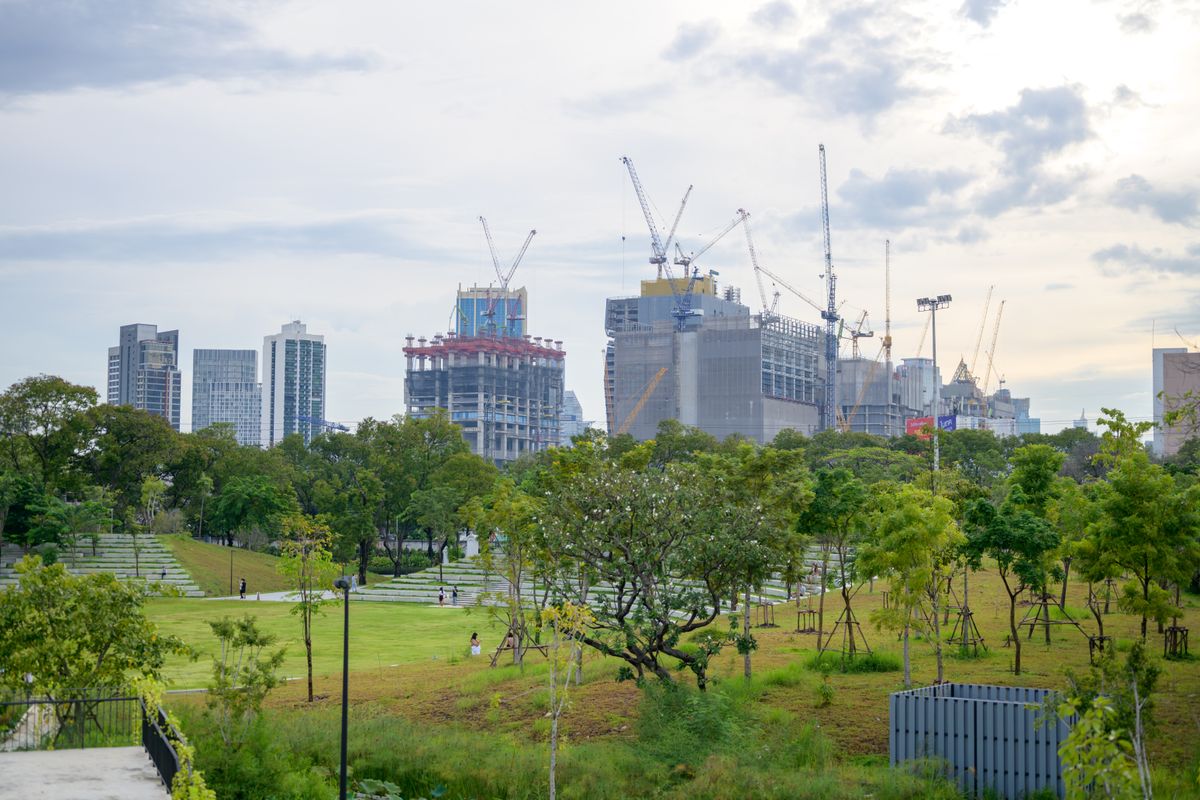
Real Estate And Green Economy Analysis By Zeeglobalvision | Investor Confidence, Market Activity And Sustainable Construction
Real estate growth depends on more than rising property prices.
A healthy property market requires genuine demand, accessible finance, clear ownership, reliable infrastructure, capable construction firms and investors who believe that rules will remain understandable long enough for capital to earn a reasonable return.
When confidence improves, buyers become more willing to purchase, lenders become more willing to finance, developers become more willing to launch projects and businesses become more willing to occupy new space.
When confidence weakens, the opposite occurs.
Transactions slow. Projects are delayed. Vacancies rise. Land remains unused. Contractors lose work and investors demand lower prices before accepting additional risk.
Sustainable construction adds another dimension to this system. Energy-efficient, resilient and responsibly designed buildings can reduce operating costs, strengthen long-term value and create demand for new skills, materials and technologies.
But green labels alone do not guarantee economic value. Sustainable construction must be commercially viable, technically credible and connected with real market demand.
Zeeglobalvision Market Principle: Real estate activity expands when investors trust the rules, buyers can afford the product and completed buildings remain useful, efficient and resilient throughout their lifecycle.
What Real Estate Growth Actually Means
Real estate growth is often reduced to one question: are prices rising?
That is incomplete.
A market can experience rising prices while construction slows, transaction volumes collapse and affordability deteriorates. Price growth may reflect genuine demand, restricted supply, currency weakness, speculation or a temporary shortage of properties offered for sale.
A stronger assessment examines several indicators together:
- Sales and leasing activity
- New construction and permits
- Mortgage and development finance
- Vacancy and occupancy
- Rental income
- Household purchasing power
- Construction costs
- Investor participation
- Infrastructure availability
Healthy growth means more than expensive property. It means the market is producing and using buildings that support households, businesses and wider economic activity.
Why Investor Confidence Controls Market Activity
Property investment requires large amounts of capital and long holding periods.
An investor may need several years to acquire land, obtain approvals, arrange finance, complete construction, achieve occupancy and recover the investment.
This makes confidence essential.
Investors usually examine:
- Economic stability
- Interest rates
- Inflation
- Currency risk
- Property rights
- Planning and approval procedures
- Tax treatment
- Construction costs
- Rental and resale demand
- Political and regulatory predictability
Confidence does not mean believing that property prices can never fall.
It means believing that risks can be understood, contracts can be enforced and the market will remain functional enough to buy, build, lease, refinance or sell.
Interest Rates Shape Property Decisions
Real estate is highly sensitive to financing conditions.
Higher interest rates can increase:
- Mortgage payments
- Construction-loan expenses
- Required investor returns
- Refinancing pressure
- The discount rate applied to future rental income
When borrowing becomes more expensive, buyers may qualify for smaller loans and developers may postpone marginal projects.
Lower rates can support demand, but cheap credit does not guarantee a healthy market. If lending standards weaken or speculation becomes excessive, the resulting boom can create financial instability.
Market Activity Is More Than Transactions
A functioning real estate market includes several connected activities:
- Land acquisition
- Property development
- Residential and commercial sales
- Leasing
- Mortgage lending
- Property management
- Maintenance and renovation
- Valuation and brokerage
- Construction-material supply
When activity increases responsibly, the benefits spread into employment, professional services, finance, transport, manufacturing and local government revenue.
When activity is based mainly on land flipping or unoccupied speculative units, the economic value is weaker.
Clear Property Rights Build Confidence
Investors hesitate when ownership records are incomplete, boundaries are disputed or approval responsibilities are unclear.
Reliable land and property systems should support:
- Verified ownership
- Accurate mapping
- Transparent transfers
- Registered mortgages
- Enforceable contracts
- Accessible planning information
Digital land records can improve transparency, but technology cannot replace sound law, institutional capacity and fair dispute resolution.
Infrastructure Converts Land Into Usable Real Estate
Land does not become valuable only because it is located near a growing city.
Its practical value depends on access to:
- Roads and public transport
- Water and sanitation
- Electricity
- Digital connectivity
- Schools and healthcare
- Employment centers
- Flood and climate protection
Infrastructure can increase development potential and investor interest. It can also create speculation if land values rise before useful projects or services appear.
Sustainable Construction Is Becoming A Market Issue
Sustainable construction is no longer only an environmental discussion.
It affects:
- Operating expenses
- Tenant comfort
- Insurance and resilience
- Regulatory compliance
- Financing eligibility
- Corporate reputation
- Long-term asset value
A building that consumes less energy and water may be cheaper to operate. A building designed for heat, flooding or power disruption may remain functional when weaker assets cannot.
These advantages can influence tenant demand and investor decisions, but only when performance is measured rather than advertised vaguely.
The Buildings Sector And The Green Economy
The green economy includes economic activity that reduces environmental pressure while supporting employment, innovation and long-term resilience.
Sustainable construction can create demand for:
- Energy-efficient design
- Insulation and high-performance windows
- Efficient cooling and heating
- Solar and storage systems
- Water-saving technologies
- Low-carbon materials
- Building-energy management
- Retrofit and renovation services
- Performance testing and certification
This creates opportunities for contractors, manufacturers, engineers, technicians, financial institutions and technology companies.

Handwritten infographic: Confidence connects reliable rules, finance, demand, green value and long-term real estate activity. Zeeglobalvision.
Operational Carbon And Embodied Carbon
Green construction must address two different sources of environmental impact.
Operational Carbon
Operational emissions arise from energy used during the life of a building, including cooling, heating, lighting and equipment.
Embodied Carbon
Embodied emissions arise from materials and construction processes, including cement, steel, transport, installation, replacement and disposal.
A building may be efficient in operation but still use high-impact materials. Another may reduce material emissions but perform poorly during decades of operation.
Responsible design considers both.
Green Buildings Must Be Financially Credible
Sustainability features often require higher initial investment.
The business case should compare complete lifecycle value.
Lifecycle Value = Income + Avoided Operating Cost + Resilience Value − Initial Cost − Maintenance − Replacement
The calculation should include realistic assumptions involving energy prices, maintenance, occupancy, financing and useful life.
A green feature that cannot be maintained or used correctly may fail to deliver its predicted benefit.
A Hypothetical Green Development Decision
Consider a hypothetical mixed-use project with a conventional construction budget of $50 million.
A more efficient design increases initial cost by 4%, or $2 million.
The improvements are expected to reduce annual energy and maintenance expenses by approximately $350,000.
Additional Initial Cost: $2,000,000
Illustrative Annual Operating Saving: $350,000
Simple Ten-Year Saving: $3,500,000
Illustrative Difference Before Financing, Discounting And Replacement: $1,500,000
The design may also improve resilience, tenant comfort and marketability.
However, the expected benefits depend on construction quality, occupancy, energy prices and proper operation.
This example is hypothetical and does not represent a Zeeglobalvision client, actual development or guaranteed return.
Greenwashing Can Damage Investor Confidence
A project should not be described as sustainable simply because it includes landscaping, solar panels or green branding.
Warning signs include:
- No measurable energy or water target
- No baseline for comparison
- Unverified environmental claims
- Ignoring material and construction impacts
- Promising certification before assessment
- Using sustainability language without operating data
Credible green investment requires measurable performance, transparent methodology and qualified verification.
Investor Confidence And Climate Risk
Real estate is fixed in location, which makes climate exposure especially important.
Investors increasingly need to consider:
- Flooding
- Extreme heat
- Water stress
- Storm damage
- Insurance availability
- Energy reliability
- Future building standards
A property may appear profitable under historical conditions but become expensive to insure, cool, repair or finance as risks change.
Sustainable construction should therefore include resilience, not only energy efficiency.
Retrofits Are Part Of The Green Economy
New construction receives attention, but most buildings that will be used in the near future already exist.
Retrofit opportunities include:
- Improved insulation
- Efficient cooling and heating
- Lighting upgrades
- Solar generation
- Water-saving equipment
- Smart controls
- Flood and heat protection
Retrofits can create local employment because assessment, installation, maintenance and verification often require work near the building.
When Real Estate Growth Becomes Unhealthy
Market activity becomes dangerous when it is disconnected from income, occupancy and productive use.
Warning signs may include:
- Rapid price growth with weak rental demand
- Large numbers of vacant units
- Heavy reliance on short-term borrowing
- Unverified land or approvals
- Developers funding old obligations through new sales
- Marketing based mainly on guaranteed appreciation
- Construction without supporting infrastructure
Investor confidence should be built through evidence and governance—not through promises that prices cannot decline.
The Zeeglobalvision GROWTH Framework
G — Genuine Demand
Confirm that households, tenants or businesses can use and afford the completed property.
R — Reliable Rules
Verify ownership, approvals, taxes, contracts and regulatory responsibilities.
O — Obtainable Finance
Test mortgage, construction and refinancing costs under realistic interest-rate conditions.
W — Well-Planned Supply
Connect development with infrastructure, construction capacity and market absorption.
T — Transition To Green Construction
Measure lifecycle energy, materials, resilience and operating performance.
H — Hold Long-Term Value
Prioritize occupancy, maintenance, affordability and useful economic life over short-term speculation.
The Real Estate Growth Readiness Score
Score each GROWTH category from zero to three:
- 0 — Missing: No reliable evidence exists.
- 1 — Weak: The project depends heavily on optimism or price growth.
- 2 — Functional: Reasonable controls exist with identifiable gaps.
- 3 — Strong: Demand, finance, governance and lifecycle value are clearly supported.
| Score | Market Position | Priority |
|---|---|---|
| 0–5 | Speculation Without Foundations | Verify title, demand, finance and infrastructure before committing capital. |
| 6–10 | Investor Confidence Exposed | Strengthen approvals, financing resilience and occupancy evidence. |
| 11–14 | Generally Investable | Improve green performance, lifecycle analysis and market monitoring. |
| 15–18 | Sustainable Market Growth | Maintain transparency, affordability, resilience and long-term asset quality. |
This score is an editorial education tool, not a property valuation, investment recommendation, environmental certification or development approval.
Questions Investors And Developers Should Ask
- Who will buy, rent or use the completed property?
- Are ownership and approvals independently verified?
- Can the project survive higher interest rates or slower sales?
- Is infrastructure available when occupancy begins?
- Which sustainability benefits are measurable?
- What is the complete lifecycle cost?
- How is climate risk assessed?
- What happens if rents or prices weaken?
- Can the asset be maintained with local skills and resources?
- Is the return based on income and use—or mainly on expected appreciation?
External Learning Links For More Understanding
- Bank For International Settlements: Residential Property Price Statistics
- International Monetary Fund: Global Financial Stability Report
- UNEP: Global Status Report For Buildings And Construction 2024–2025
- International Energy Agency: Energy Efficiency 2025—Buildings
- World Bank: Resilient, Green And Inclusive Buildings
- IFC EDGE: Green Building Certification And Resource Efficiency
Final Perspective
Real estate growth, investor confidence and sustainable construction are not separate subjects.
They operate as one market system.
Investors need confidence that ownership, financing and regulation are reliable. Buyers and tenants need properties they can afford and use. Developers need infrastructure, construction capacity and realistic demand.
The green economy adds long-term requirements involving energy, water, materials, resilience and operating cost.
A property market cannot be called healthy simply because prices are rising.
Healthy growth should create:
- Useful housing and commercial space
- Transparent investment opportunities
- Construction and green-economy employment
- Efficient and resilient buildings
- Long-term market activity supported by real demand
The central question is not:
“Are investors buying property?”
The stronger question is:
“Are confidence, finance, construction and sustainability working together to create real long-term value?”
Real Estate, Construction And Investment Disclaimer: This content is for general educational purposes only and does not provide real estate, investment, financial, engineering, construction, environmental, tax, valuation, regulatory or legal advice. Property and development outcomes vary according to location, title, financing, demand, regulation, climate risk and construction quality. Hypothetical calculations exclude many taxes, financing costs and project-specific conditions. The Zeeglobalvision GROWTH Framework and Real Estate Growth Readiness Score are editorial learning tools, not property valuations, sustainability certifications or investment recommendations. Obtain advice from appropriately qualified professionals before making material decisions.
References
- Bank For International Settlements: Residential Property Price Statistics, Q4 2025
- International Monetary Fund: Global Financial Stability Report, October 2025—Real Estate And Financial Conditions
- United Nations Environment Programme: Global Status Report For Buildings And Construction 2024–2025
- International Energy Agency: Breakthrough Agenda Report 2025—Buildings
- International Energy Agency: Energy Efficiency 2025—Buildings
- World Bank: Resilient, Green And Inclusive—Better Buildings For A Changing World
- Pexels: City Buildings Under Construction
Comments
Post a Comment