When Markets Turn Against You: How Gold Can Protect Wealth During Financial Stress
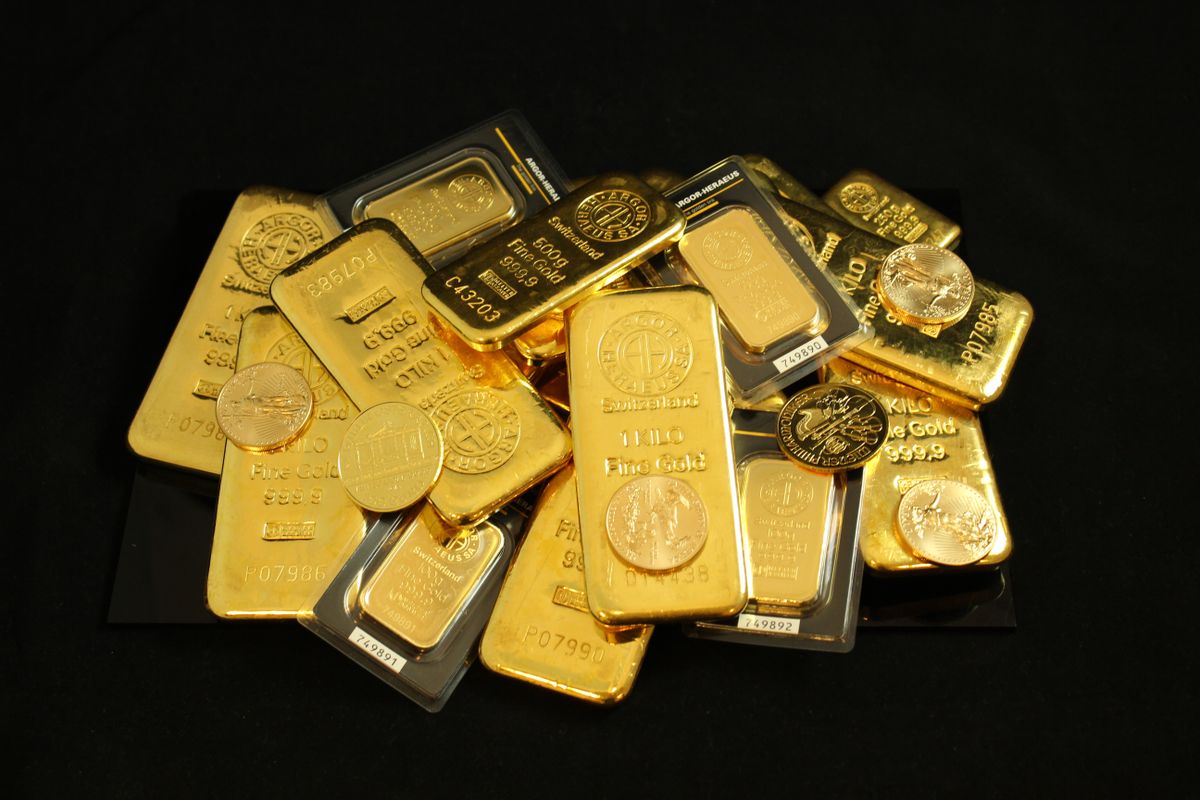
Gold And Portfolio Protection Analysis By Zeeglobalvision | Diversification, Market Stress, Central Banks And Long-Term Wealth Protection
Gold becomes most interesting when investors stop asking how much it can rise and start asking what happens when the rest of the portfolio comes under pressure.
Stocks can fall. Bonds can lose value when inflation or interest rates surprise markets. Currencies can weaken. Credit risk can rise. Geopolitical shocks can disrupt the relationships investors expected to protect them.
Gold is often used as a defensive asset because it is scarce, globally traded, highly liquid and does not depend on the promise of a company or government to repay principal.
But that does not mean gold rises every time markets fall.
Gold can experience sharp drawdowns, long periods of weak returns and price movements driven by interest rates, currencies, investor positioning and speculation.
The stronger case for gold is therefore not:
“Gold always wins when markets lose.”
It is:
“Gold can behave differently enough from other assets to improve the resilience of a diversified portfolio during certain forms of financial stress.”
Zeeglobalvision Wealth Principle: Gold is not a replacement for productive assets, cash flow or a complete investment plan. Its strongest role is often as a liquid diversifier when confidence in other parts of the financial system weakens.
Why Investors Turn To Gold During Market Stress
Investors need different assets to perform different jobs.
Equities are primarily growth assets. Bonds can provide income and defensive characteristics. Cash provides immediate liquidity. Gold is different because it does not produce earnings, coupons or rental income.
Its investment case comes from other characteristics:
- Scarcity
- Global liquidity
- No issuer credit risk
- Multiple sources of demand
- A long history as a monetary and reserve asset
- Potential diversification during periods of market stress
The World Gold Council’s 2026 strategic-asset research argues that gold’s combination of liquidity, long-term return history and diversification can improve a portfolio’s risk-adjusted characteristics.
The important word is diversification.
Gold does not need to outperform every asset every year to be useful. It needs to behave differently enough at important times to reduce dependence on one economic outcome.

3D cutaway: Wealth protection works through layers—growth assets, gold diversification and liquid reserves each perform a different job. Zeeglobalvision.
Gold Is Not A Guaranteed Safe Haven
The phrase “safe haven” is often used too casually.
A defensive asset should ideally remain liquid and hold or improve its relative value during periods when risky assets are under pressure.
Gold has often displayed those characteristics, but not consistently enough to treat every crisis as predictable.
The Bank for International Settlements noted in its March 2026 market review that precious metals experienced large price swings. Gold reached fresh highs earlier in the year, but later suffered a sharp correction alongside silver.
This matters because protection does not mean price stability.
An investor can buy gold for diversification and still experience a significant short-term loss.
What 2026 Gold Demand Is Telling Investors
Gold entered 2026 after a powerful multi-year period.
According to the World Gold Council’s Gold Demand Trends report for the second quarter of 2026:
- Total gold demand including over-the-counter activity was approximately 1,269 tonnes in Q2.
- First-half demand reached approximately 2,522 tonnes, about 2% higher than a year earlier.
- The value of first-half demand reached a record approximately US$380 billion.
- Central banks bought approximately 289 tonnes in Q2.
- Bar and coin investment was approximately 307 tonnes in Q2.
The same report states that the LBMA PM gold price averaged approximately US$4,506 per ounce in Q2 2026. That was below the Q1 record average but substantially above the equivalent quarter a year earlier.
This combination demonstrates an important point.
Gold can remain strategically desirable while still experiencing corrections.
Central Banks Are Still Treating Gold As A Strategic Reserve Asset
Central-bank behavior is one of the strongest structural arguments supporting gold’s continuing role in the international financial system.
The World Gold Council’s 2026 Central Bank Gold Reserves Survey collected responses from 76 central banks.
It found:
- 89% expected global central-bank gold reserves to increase over the following twelve months.
- A record 45% expected their own institutions to increase gold holdings.
- 84% expected gold to represent a higher share of total reserves five years later.
The survey also reported that central banks had accumulated about 1,000 tonnes of gold per year on average over the previous four years, roughly double the average pace of the preceding decade.
Reserve managers are not buying gold because it pays a coupon.
They value qualities such as liquidity, diversification, lack of direct credit risk and resilience during geopolitical and monetary uncertainty.
Gold Has No Issuer Credit Risk
A bond is someone else’s liability.
A bank deposit is a claim on a financial institution.
A share represents ownership in a company.
Physical gold itself is not a promise from an issuer to repay you.
That distinction becomes more important during periods when investors become concerned about financial institutions, sovereign credit or payment systems.
However, the way an investor owns gold still matters.
A gold ETF, futures contract, certificate, bank account or storage provider introduces different forms of operational, custody, liquidity or counterparty exposure.
Gold And Inflation Protection
Gold is frequently described as an inflation hedge.
That description needs qualification.
Gold has historically preserved purchasing power over very long periods, but it does not move in perfect alignment with consumer-price inflation every month or every year.
Its price can be influenced by:
- Real interest rates
- Currency movements
- Central-bank demand
- Investment flows
- Geopolitical risk
- Jewellery demand
- Market positioning
Gold may therefore be better understood as protection against a wider range of monetary and confidence risks rather than as a precise short-term inflation tracker.
Gold And Currency Weakness
Gold is globally priced and traded.
For investors whose domestic currency is weakening against major international currencies, local gold prices can rise even when the international dollar price is relatively stable.
This creates another potential diversification benefit.
But currency effects work both ways.
A strengthening domestic currency can reduce local gold returns.
Gold And Stock-Market Crashes
Gold is often expected to rise whenever equities fall.
The relationship is not that simple.
During severe liquidity events, investors may initially sell gold alongside other assets because they need cash or must meet margin calls.
Gold may later recover as policy responses, lower real rates, currency concerns or safe-haven demand become dominant.
Therefore, gold’s usefulness should be evaluated across complete stress periods rather than one trading day.

Handwritten infographic: Gold can diversify market stress, but wealth protection works best when gold remains one component of a broader plan. Zeeglobalvision.
What Gold Cannot Do
A balanced gold strategy begins by understanding its weaknesses.
Gold Produces No Cash Flow
Gold does not generate earnings, dividends, rental income or interest.
An investor’s return depends mainly on the future market price.
Gold Can Be Volatile
The BIS documented sharp precious-metal price swings in early 2026. High demand and safe-haven interest do not eliminate drawdown risk.
Gold Can Become Expensive
When fear is already extreme, investors may pay a high price for protection.
Buying after a large rally can produce poor short-term returns even when the long-term diversification case remains intact.
Physical Gold Has Friction
Physical bullion may involve:
- Dealer spreads
- Storage
- Insurance
- Verification
- Security
- Resale costs
Physical Gold, ETFs And Other Forms Of Exposure
| Method | Potential Strength | Important Risk |
|---|---|---|
| Physical Bullion | Direct ownership without issuer credit exposure | Storage, security, authenticity and spreads |
| Gold ETF | Liquidity and convenient portfolio access | Fund structure, fees and market tracking |
| Mining Shares | Operating leverage to gold prices | Company, cost, political and equity-market risk |
| Futures | Professional-market liquidity and precise exposure | Leverage, margin and rollover risk |
Mining shares are especially important to distinguish from bullion.
A mining company can suffer from rising costs, operational failures, debt or political problems even when gold prices rise.
A Hypothetical Portfolio Stress Example
Consider a hypothetical US$100,000 diversified portfolio.
Assume it holds:
- 60% growth assets
- 30% bonds and income assets
- 10% gold
Now imagine a stress period in which growth assets fall 20%, bonds fall 5% and gold rises 10%.
Growth Assets: US$60,000 × −20% = −US$12,000
Bonds: US$30,000 × −5% = −US$1,500
Gold: US$10,000 × +10% = +US$1,000
Illustrative Portfolio Change: −US$12,500, or −12.5%
The gold position does not eliminate the loss. It reduces the loss under this particular hypothetical scenario.
This does not prove that gold will rise in a future crisis.
It demonstrates the mechanism through which an asset with different behavior can reduce portfolio concentration.
The example is hypothetical and excludes fees, taxes, currency effects and rebalancing.
The Zeeglobalvision SHIELD Gold Framework
S — Stress Test The Portfolio
Identify which risks dominate the portfolio: equity concentration, inflation, currency weakness, credit risk or liquidity pressure.
H — Hold Gold For A Defined Role
Decide whether gold is intended for diversification, liquidity, currency protection or long-term wealth preservation.
I — Integrate Rather Than Speculate
Treat gold as one component of a diversified portfolio rather than an all-or-nothing market prediction.
E — Evaluate The Ownership Method
Compare physical bullion, ETFs and other forms of exposure according to liquidity, cost, custody and risk.
L — Limit Concentration
A defensive asset can become a speculative risk when it dominates the portfolio.
D — Discipline Through Rebalancing
Review the allocation periodically rather than chasing gold after a dramatic price move.
The Gold Protection Readiness Score
Score each SHIELD category from zero to three:
- 0 — Missing: Gold is being bought mainly from fear or headlines.
- 1 — Reactive: The investor understands some benefits but lacks a defined portfolio role.
- 2 — Structured: Gold has a clear purpose, ownership method and allocation rule.
- 3 — Disciplined: Gold is integrated with diversification, liquidity planning and periodic rebalancing.
| Score | Position | Priority |
|---|---|---|
| 0–5 | Fear-Driven Buyer | Define the risk gold is supposed to address before buying. |
| 6–10 | Partial Hedge | Clarify costs, custody and allocation discipline. |
| 11–14 | Structured Diversifier | Improve stress testing and rebalancing rules. |
| 15–18 | Disciplined Protection Plan | Maintain diversification and avoid performance chasing. |
This score is an editorial education tool, not an investment suitability assessment.
Questions To Ask Before Buying Gold
- Which risk am I trying to reduce?
- Do I need growth, income or protection from this allocation?
- How much gold exposure already exists indirectly in my portfolio?
- Am I buying after a major price surge because of fear?
- Do I understand the costs of the ownership method?
- How quickly can I access liquidity if needed?
- How will currency movements affect my return?
- What event would make me reduce or rebalance the position?
- Would this allocation still make sense if gold fell 20%?
- Does the portfolio remain diversified after adding gold?
External Learning Links For More Understanding
- World Gold Council: Gold As A Strategic Asset 2026
- World Gold Council: Gold Demand Trends Q2 2026
- World Gold Council: Central Bank Gold Reserves Survey 2026
- Bank For International Settlements: Markets Recalibrate Amid Shifting Currents
- International Monetary Fund: International Reserves And Foreign Currency Liquidity
Final Perspective
Gold is not magic.
It does not generate cash flow. It does not rise in every crisis. It can become expensive and it can fall sharply.
Yet those limitations do not eliminate its portfolio role.
Gold remains unusual because it combines global liquidity, scarcity, monetary history, no direct issuer credit risk and diverse sources of demand.
That is why investors and central banks continue to use it as part of broader reserve and diversification strategies.
The strongest gold strategy is therefore not based on predicting the next crash.
It is based on recognizing that markets can fail in different ways and that a portfolio built around one economic outcome is fragile.
The central question is not:
“Will gold go up next?”
The stronger question is:
“If markets turn against me, does my portfolio contain assets designed to behave differently enough to protect my long-term financial position?”
Investment Disclaimer: This content is for general educational purposes only and does not provide personalized investment, financial, tax, legal, retirement or portfolio-management advice. Gold prices can rise or fall significantly and past safe-haven behavior does not guarantee future performance. Physical bullion, ETFs, mining shares and derivatives have different risks, costs and tax treatment. The hypothetical examples, Zeeglobalvision SHIELD Framework and Gold Protection Readiness Score are educational tools and not recommendations to buy, sell or hold any asset. Consider your objectives, risk tolerance, liquidity needs and local regulations, and obtain advice from appropriately qualified professionals where necessary.
References
- World Gold Council: Gold As A Strategic Asset—2026 Edition
- World Gold Council: Gold's Diversification Characteristics—2026
- World Gold Council: Gold Demand Trends Q2 2026
- World Gold Council: Central Bank Gold Reserves Survey 2026
- Bank For International Settlements: Quarterly Review, March 2026
- BIS: Boom And Bust Of The Recent Silver And Gold Rush
- International Monetary Fund: Official Reserve Composition Data Brief, July 2026
- International Monetary Fund: International Reserves And Foreign Currency Liquidity Dataset
- Pexels: Gold Bars And Coins By Zlaťáky.cz
Comments
Post a Comment