Build A Strong Construction Business Plan: Technology Tools For Modern Contractors
Construction Business Strategy By Zeeglobalvision | Business Planning, Cash Flow, Technology And Profitable Growth
A construction company can win projects and still fail as a business.
The reason is simple: building work and building a construction business are not the same job.
A contractor may understand concrete, steel, finishes, equipment and site supervision but still underprice work, accept the wrong clients, run out of cash between payment certificates, expand too quickly or buy software that nobody uses properly.
A strong construction business plan connects the commercial side of the company with the operational reality of delivering projects.
It should explain which clients and project types the company will pursue, why those clients should choose the business, how work will be estimated and priced, how projects will be staffed and controlled, how cash flow will be protected and which technology will improve measurable business performance.
Technology matters, but software is not the business model.
Zeeglobalvision Business Principle: Do not digitize confusion. Define the customer, margin, cash-flow system and operating process first—then select technology that strengthens those controls.
Why A Construction Business Needs A Real Business Plan
A business plan is not only a document prepared for a bank or investor. It is a management system for deciding where the company will compete, how it will make money and which risks could destroy it.
The U.S. Small Business Administration describes the business plan as a roadmap for structuring, operating and growing a company. Its recommended components include company description, market analysis, organization, services, marketing, funding needs and financial projections.
For contractors, those sections should also reflect the realities of bonding, insurance, subcontracting, equipment, retainage, delayed payments and working capital.
Step One: Define The Construction Market
“Construction” is too broad to be a useful target market.
A company should define its preferred:
- Project type
- Geographic area
- Typical project value
- Client type
- Contracting method
- Technical complexity
- Payment profile
A contractor that performs profitable small commercial renovations can damage itself by pursuing a major infrastructure contract without the staff, capital, controls or balance sheet required to manage it.
Step Two: Build A Credible Competitive Position
“High quality at competitive prices” is not a strong position because almost every contractor can make the same claim.
A stronger position may focus on:
- Occupied-building renovations
- Healthcare fit-outs
- Energy-efficient retrofits
- Industrial shutdown work
- Repeat corporate maintenance
- Specialist BIM coordination
Positioning must match actual capability. A company should not market itself as a specialist in sustainable construction, BIM or complex engineering when its staff and processes cannot support the promise.
Step Three: Create A Reliable Estimating System
The estimate must account for more than material and direct labor.
- Labor
- Materials
- Subcontractors
- Equipment
- Temporary works
- Site supervision
- Safety and quality requirements
- Insurance and bonding
- Office overhead
- Risk allowance
- Target profit
Bid Price = Direct Cost + Project Overhead + Company Overhead + Risk Allowance + Target Profit
Underpricing can increase revenue while weakening the company. The purpose of estimating is to produce a commercially defensible price for the scope and risk being accepted.
Step Four: Understand Margin
A contractor can complete profitable projects and still lose money at company level if head-office costs are uncontrolled.
Gross Margin % = (Revenue − Direct Project Cost) ÷ Revenue × 100
Management should review margin by client, project type, estimator and project manager. The work creating the most revenue may not be the work creating the most profit.
Step Five: Protect Construction Cash Flow
A contractor may need to pay workers, suppliers and subcontractors before receiving payment from the client.
Cash can become trapped through:
- Retainage
- Unapproved variations
- Slow certification
- Disputed invoices
- Material deposits
- Equipment purchases
- Tax obligations
A profitable project can therefore create a cash crisis. The financial plan should forecast cash by month rather than assuming that recognized revenue equals available money.
Step Six: Decide Which Projects To Refuse
Growth is not the same as accepting every available project.
A bid/no-bid review should consider client payment history, contract conditions, technical capability, available staff, required working capital, schedule realism, expected margin and strategic value.
One badly selected project can consume the profit generated by several successful jobs.
Step Seven: Build The Organization Around Delivery
The plan should clarify responsibility for:
- Business development
- Estimating
- Contracts
- Procurement
- Project management
- Site supervision
- Safety
- Quality
- Finance
- Technology administration
Small contractors may combine several roles in one person, but growth becomes difficult when every important decision still requires the owner.
Technology Should Follow The Business Plan
Construction technology should solve a defined business problem.
- Which process is currently weak?
- How much time, cost or risk does the weakness create?
- Which information must the system control?
- Who will use it?
- How will success be measured?

Handwritten business map: Build the market, margin, cash-flow and operating system first—then use technology to standardize and scale it. Zeeglobalvision.
Technology Tool One: Estimating And Digital Takeoff
Digital estimating and takeoff tools can improve consistency by helping teams measure quantities, organize bid packages, compare subcontractor quotations and maintain cost databases.
BIM-based takeoff can connect model information with quantities where the model is sufficiently complete.
The estimator must still evaluate scope gaps, productivity, waste, market pricing, temporary works, contract risk and construction methodology.
Technology Tool Two: Cloud Document Management
Construction companies need a controlled location for drawings, specifications, RFIs, submittals, photographs and approvals.
Autodesk describes its construction platform as a cloud-based construction-management and collaboration environment using a common data environment for centralized file management and integrated workflows.
The important requirements are revision control, permissions, searchable records, mobile access, approval workflows and reliable backups.
Technology Tool Three: BIM And Coordination
Building Information Modeling can support design coordination, clash review, quantity takeoff, constructability, 4D planning and asset-information handover.
Small contractors do not need every BIM capability immediately. Adoption should match client requirements and internal capability.
Technology Tool Four: Scheduling And Look-Ahead Planning
Modern project-management platforms can connect master schedules with field teams. Autodesk documents schedule integrations with systems such as Primavera P6, Microsoft Project and ASTA Powerproject.
A detailed schedule still has little value if supervisors do not translate it into look-ahead plans, labor requirements, material needs, access and inspections.
Technology Tool Five: Field Management
Mobile field tools can support daily reports, quality inspections, safety observations, progress photographs, punch lists and issue tracking.
The benefit is faster information flow. The risk is creating excessive forms that add administration without improving control.
Technology Tool Six: Cost And Financial Management
The accounting and project-cost system should help management see:
- Original budget
- Committed cost
- Actual cost
- Approved changes
- Forecast cost to complete
- Accounts receivable
- Accounts payable
- Cash requirements
Project managers should not discover cost overruns only after invoices reach accounting.
Technology Tool Seven: CRM And Business Development
A construction CRM can track leads, bid invitations, client relationships, opportunities, win/loss reasons and repeat business.
The objective is not simply to maximize bids. It is to improve the quality of opportunities entering the estimating pipeline.
Technology Tool Eight: Equipment And Fleet Management
Contractors operating significant plant or vehicles may benefit from systems that track location, utilization, maintenance, fuel, inspections and operating hours.
Underutilized equipment ties up capital. Poorly maintained equipment creates downtime, safety exposure and emergency repair costs.
Technology Tool Nine: Dashboards And Business Intelligence
Useful construction-business indicators may include:
- Backlog
- Bid-hit ratio
- Gross margin
- Cash balance
- Receivable days
- Schedule performance
- Change-order exposure
- Safety incidents
- Rework
A dashboard should support decisions rather than display dozens of metrics nobody acts upon.
Technology Tool Ten: AI Assistance
Artificial intelligence can support document classification, meeting summaries, draft correspondence, risk prioritization, information search, data extraction and forecast assistance.
AI outputs require review. Companies should not send confidential drawings, contracts, banking information, employee records or client data into unapproved public systems.
Cybersecurity Is A Construction Business Risk
Digital contractors hold sensitive information involving contracts, banking, payroll, supplier payments, drawings and employee records.
NIST’s Cybersecurity Framework 2.0 small-business guidance provides a practical starting point for firms with limited cybersecurity resources.
Basic protections should include:
- Multi-factor authentication
- Software updates
- Backups
- Role-based access
- Employee awareness
- Incident-response planning
A Hypothetical Construction Business Plan
Consider a hypothetical contractor generating $5 million in annual revenue and specializing in commercial renovation.
The business wants to reach $8 million within three years but discovers that bid volume is high while win rate is low, estimators use different spreadsheets, project photographs remain on personal phones, change orders are submitted late and cash forecasts are prepared only when money becomes tight.
Instead of buying ten different systems, management follows a sequence:
- Define target clients and a bid/no-bid score.
- Standardize estimating and cost codes.
- Introduce one cloud document and field platform.
- Connect project cost reporting with accounting.
- Create a weekly cash and backlog dashboard.
- Test AI only after document permissions and workflows are controlled.
This example is hypothetical and does not represent a Zeeglobalvision client or guaranteed business outcome.
The Zeeglobalvision BUILDER Framework
B — Best-Fit Market
Select clients, project types and geographies that match capability and capital.
U — Understand Unit Economics
Know estimating assumptions, gross margin, overhead and project-level profitability.
I — Insure And Control Risk
Manage contracts, safety, insurance, quality and working-capital exposure.
L — Liquidity Before Growth
Forecast cash and protect the company from growth it cannot finance.
D — Delivery System
Standardize planning, procurement, project controls and closeout.
E — Enable With Technology
Select digital tools only when they solve a defined operational or commercial problem.
R — Review The Numbers
Track backlog, margin, cash, receivables, productivity and risk continuously.
The Construction Business Readiness Score
| Score | Business Position | Priority |
|---|---|---|
| 0–6 | Project-To-Project Survival | Protect cash, standardize estimating and stop uncontrolled growth. |
| 7–12 | Owner-Dependent Business | Build management systems, delegation and reliable reporting. |
| 13–17 | Controlled Contractor | Integrate technology, forecasting and repeatable business development. |
| 18–21 | Scalable Construction Business | Maintain margin discipline, cybersecurity and evidence-based expansion. |
This score is an editorial education tool, not a business valuation, lender assessment, accounting review or software-selection audit.
A Practical 90-Day Improvement Plan
Days 1–30: Diagnose
- Identify the most profitable project types.
- Review recent bids and lost opportunities.
- Calculate project margins and overhead.
- Prepare a 13-week cash-flow forecast.
- List the five most expensive process failures.
Days 31–60: Standardize
- Create a bid/no-bid process.
- Standardize estimating templates and cost codes.
- Define document-control rules.
- Create project startup and closeout checklists.
- Assign owners for finance, operations and technology.
Days 61–90: Digitize Carefully
- Select one high-value digital workflow.
- Train the people who perform the work.
- Measure adoption and error reduction.
- Connect the system with financial or project reporting.
- Expand only after measurable value appears.
Questions Every Construction Business Owner Should Ask
- Which projects generate our strongest risk-adjusted margin?
- Which clients pay reliably?
- How much working capital does our backlog require?
- Which cost overruns repeat across projects?
- Where does information currently get lost?
- Which process should be standardized before software is purchased?
- Can project managers see current cost and cash information?
- Are company and client records adequately protected?
- Which technology investment has produced measurable value?
- Could the business operate without the owner making every daily decision?
External Learning Links For More Understanding
- U.S. Small Business Administration: Write Your Business Plan
- U.S. Small Business Administration: Plan Your Business
- Autodesk: Construction Cloud Platform And Common Data Environment
- Autodesk: Construction Project Management Workflows
- Autodesk: BIM For Construction
- NIST: Cybersecurity Framework 2.0 Small Business Quick-Start Guide
Final Perspective
A strong construction business plan is not a document that sits in a folder after financing is approved.
It should guide everyday commercial decisions.
The company needs to know which work it wants, which work it should refuse, what every project must earn, how much cash growth requires, which people own each process and which technology improves control.
Modern construction tools can improve estimating, BIM coordination, scheduling, document control, field reporting, cost forecasting, equipment management and business analytics.
But software cannot rescue a contractor that consistently underprices work, ignores cash flow or accepts contracts it cannot manage.
Strategy first. Process second. Technology third. Measurement always.
The central question is not:
“Which construction software should we buy?”
The stronger question is:
“Which business problem must we solve, and which technology will measurably improve the system responsible for that problem?”
Construction Business And Technology Disclaimer: This content is for general educational purposes only and does not provide business, accounting, tax, lending, construction, engineering, insurance, cybersecurity, contractual, software-procurement or legal advice. Construction businesses vary by location, project type, capital, licensing, contract structure and risk. Product names are included as examples and are not endorsements. The Zeeglobalvision BUILDER Framework and Construction Business Readiness Score are editorial learning tools, not lender assessments, valuations or professional audits.
References
- U.S. Small Business Administration: Write Your Business Plan
- U.S. Small Business Administration: Plan Your Business
- U.S. Small Business Administration: Understanding Business Plans And Preparing For Financing, August 2026
- SBA Resource Partner: Creating Realistic Financial Projections For Your Small Business, August 2026
- Autodesk: About Autodesk Construction Cloud
- Autodesk: Construction Project Management Software
- Autodesk: BIM For Construction
- NIST: Cybersecurity Framework 2.0 Small Business Quick-Start Guide
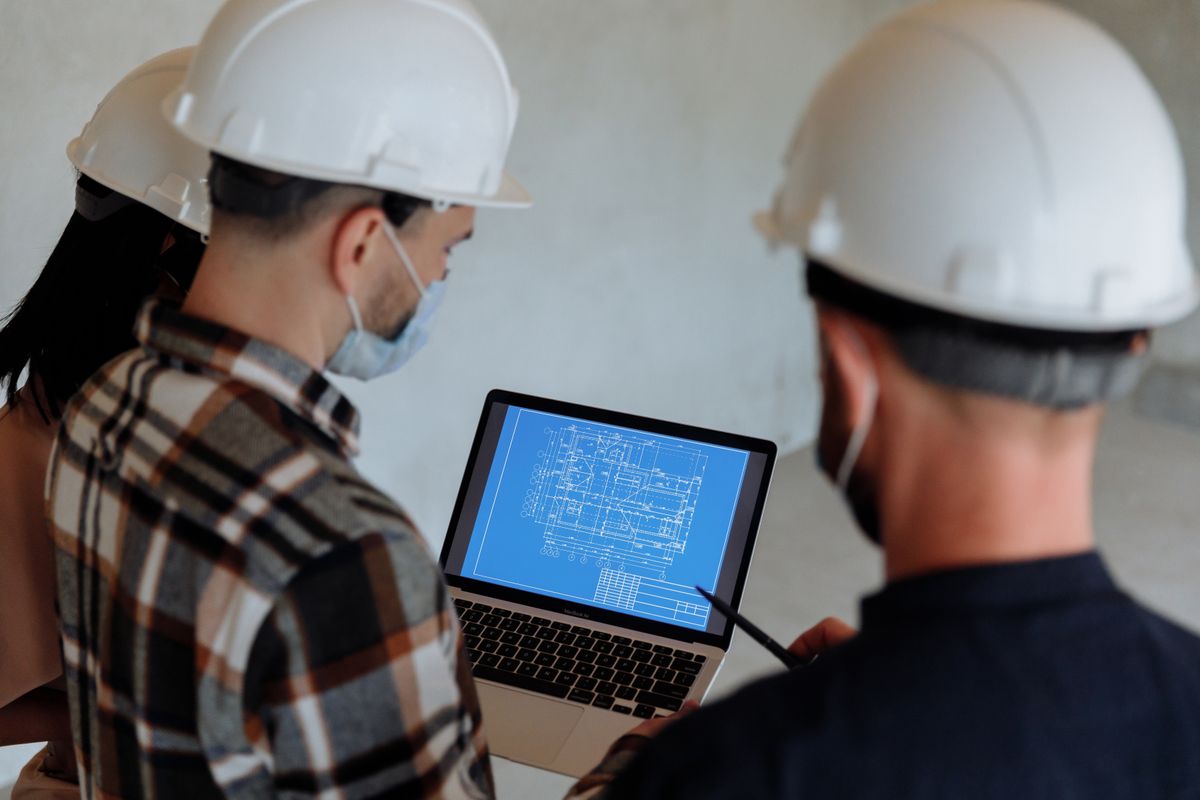
- Pexels: Construction Professionals Using A Digital Blueprint By Thirdman
Comments
Post a Comment